A denim jacket can be the quietest piece in your wardrobe or the one that changes the entire outfit. The difference often has less to do with its colour than with where it ends, how the sleeves fall and what you wear underneath.
Start with three things: the jacket's length, the volume of its cut and the contrast with the pieces below. A longer, oversized jacket can lead an outfit over a simple dark top. A cropped jacket can reveal a high waist and balance wider jeans. And if the sleeves are already a statement, straighter trousers can give them the space to stand out.
We compared three looks from The Denim Edit, including their front and back views, and examined how fashion educators and retailers explain denim construction, fit and styling. Here is what the details tell us.
First, notice where the jacket ends
Imagine two washed-blue jackets side by side.
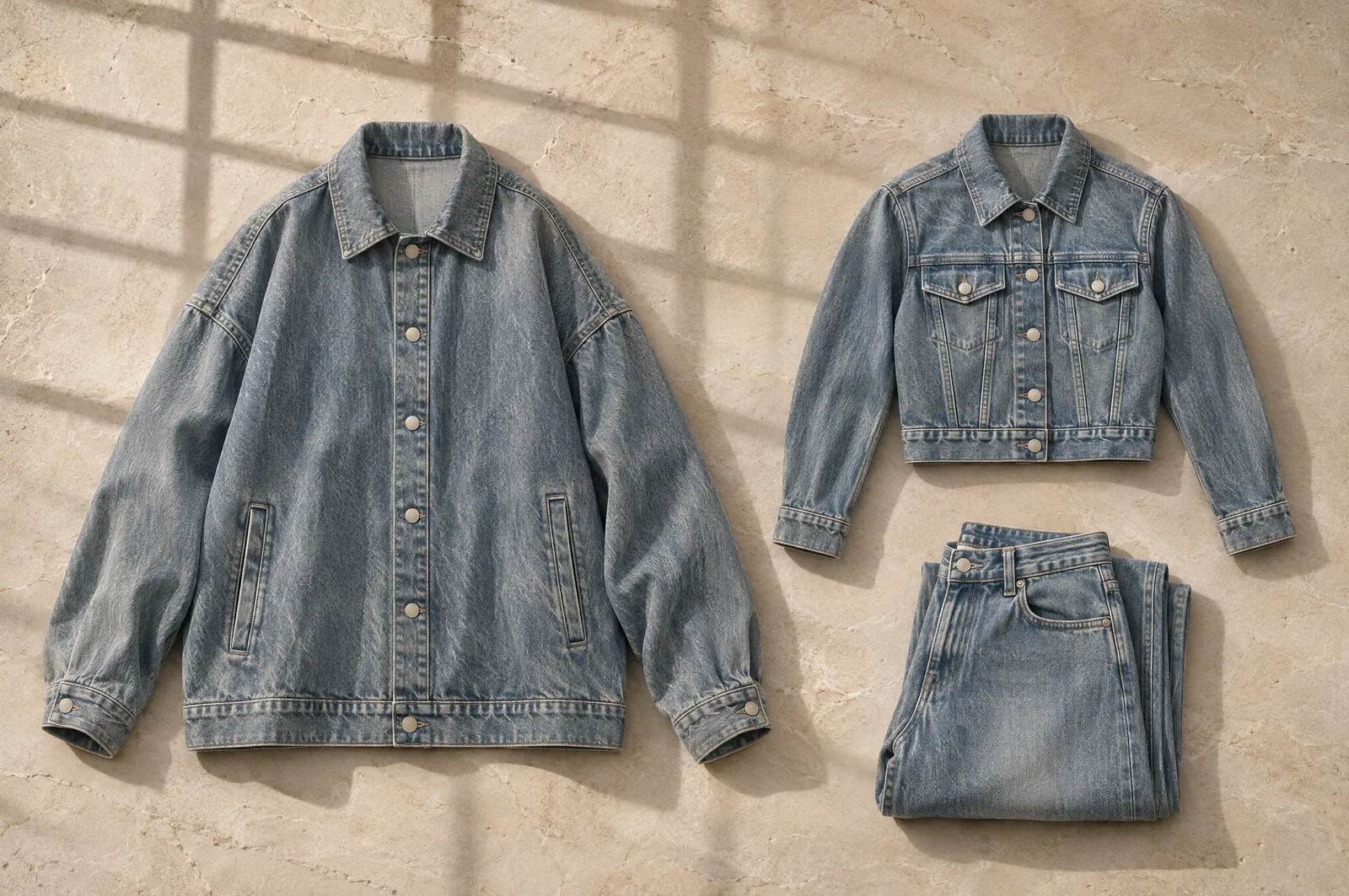
One hangs low over the hips, with dropped shoulders and long sleeves. The other stops around the waist, just as the jeans begin. Both belong to the same denim family, but they divide an outfit very differently.
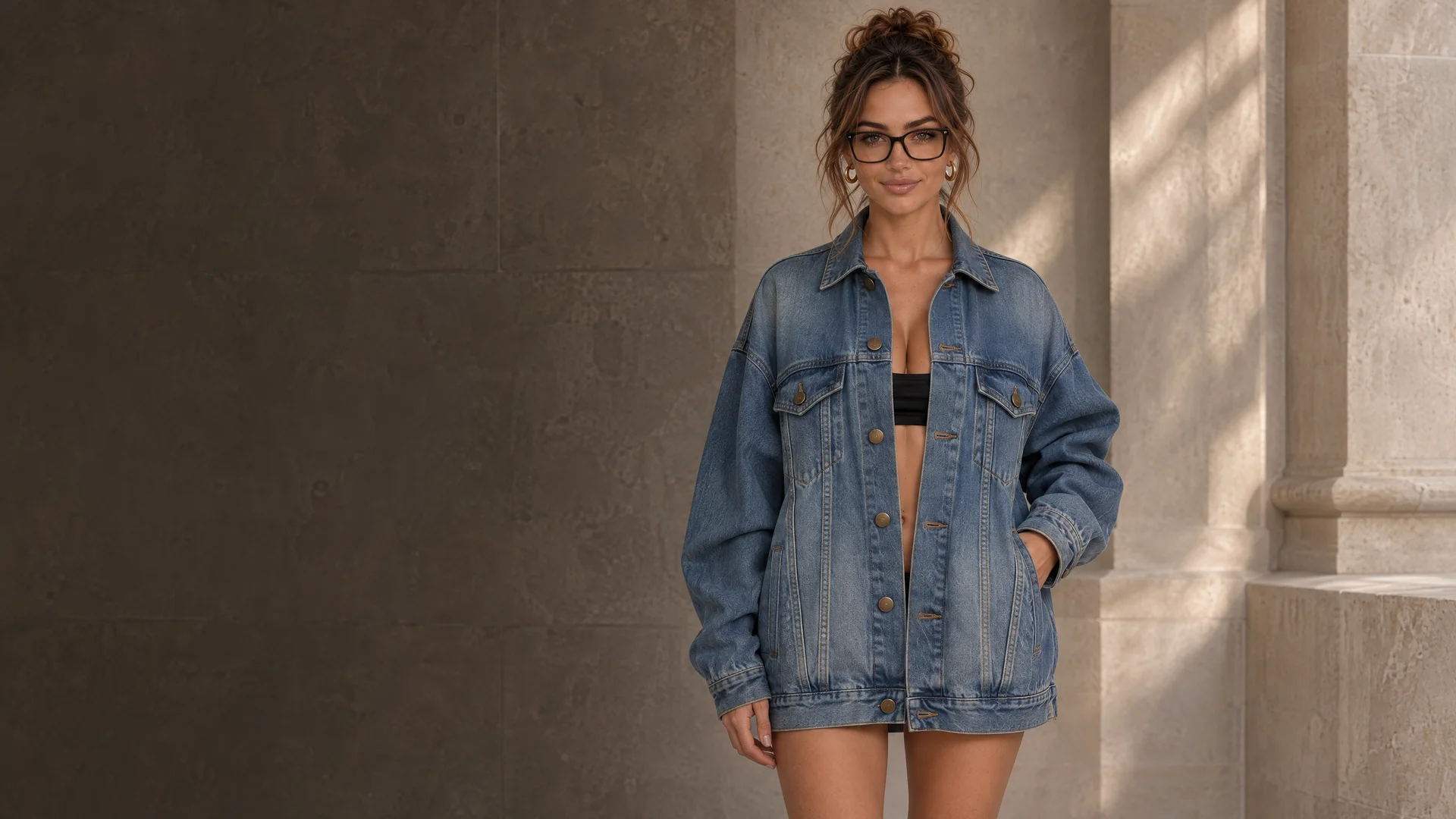
In Denim Afternoon, the oversized jacket has a low, straight hem, a point collar, button-flap chest pockets and generous sleeves. The front image shows a dark cropped underlayer within the open jacket. From behind, its broad panel and dropped shoulder make the relaxed silhouette just as apparent.
Our favourite detail is the opening at the front. The dark layer creates a narrow break in the blue, so the jacket stays dominant without looking visually flat. It is the difference between wearing something roomy and making that roominess a deliberate styling choice.
Now look at Double Denim. Its shorter trucker-style jacket finishes close to the high waistband of wide-leg jeans. There is a small visible dark layer between the jacket and the trousers. At the back, the cropped hem leaves the jeans' rear pockets and the start of the leg shape in view.
OVeIC's take: before replacing the top or shoes, check the hem. If the outfit seems weighed down, the point where jacket and trousers meet may be more important than another accessory.
Oversized versus cropped: understand the shape, not just the size
A useful technical idea here is ease. In patternmaking, wearing ease allows a real garment room for movement, while design ease changes the intended silhouette. Seamwork's explanation of ease makes that distinction clear.
Why does it matter when choosing a jacket? A deliberately oversized cut is not necessarily the same thing as simply buying a larger size of a fitted jacket. Sizing up can alter the shoulder, sleeve and overall proportions at once. A design made to be boxy may arrange those proportions differently from the beginning.
You can see the visual difference in OVeIC's images. Denim Afternoon gives the jacket most of the volume; Double Denim shifts much of that volume into the full-length legs while the cropped jacket defines a separate upper section.
Neither proportion is universally better. A long jacket may be exactly what gives an outfit its easy, unstructured mood. A shorter jacket may be the right decision when you want the waistband and trousers to become part of the composition.
Our images can show those visual relationships. They cannot establish the physical ease, measurements or movement of a garment. For a real-world purchase, the retailer's size chart and finished measurements matter.
What top should you wear underneath?
The base layer determines what happens in the opening of the jacket.
With a washed-blue, oversized jacket like Denim Afternoon, a dark, close-cut top creates a clear separation from the outer layer. The colour is simple, but it gives the open jacket a defined centre.
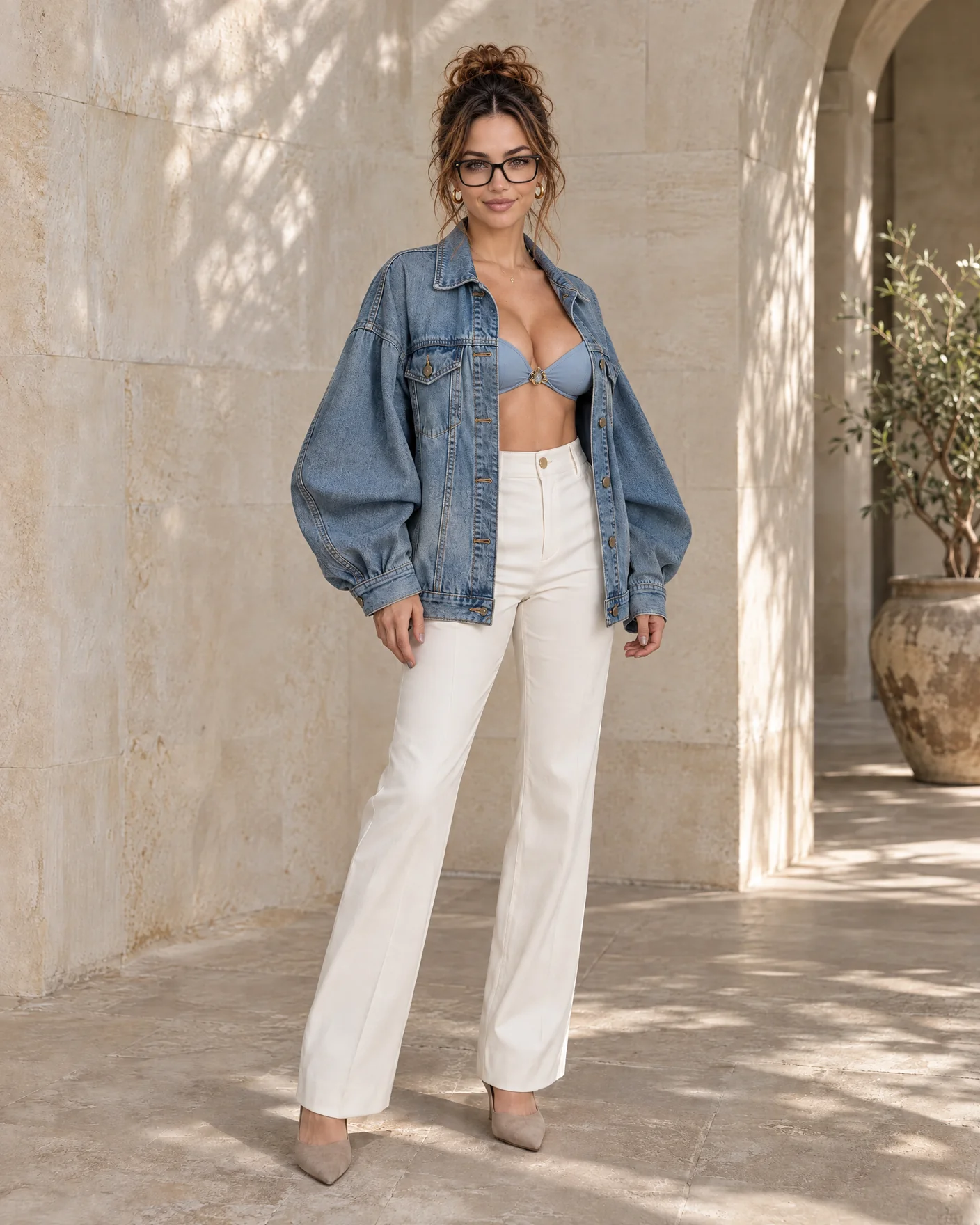
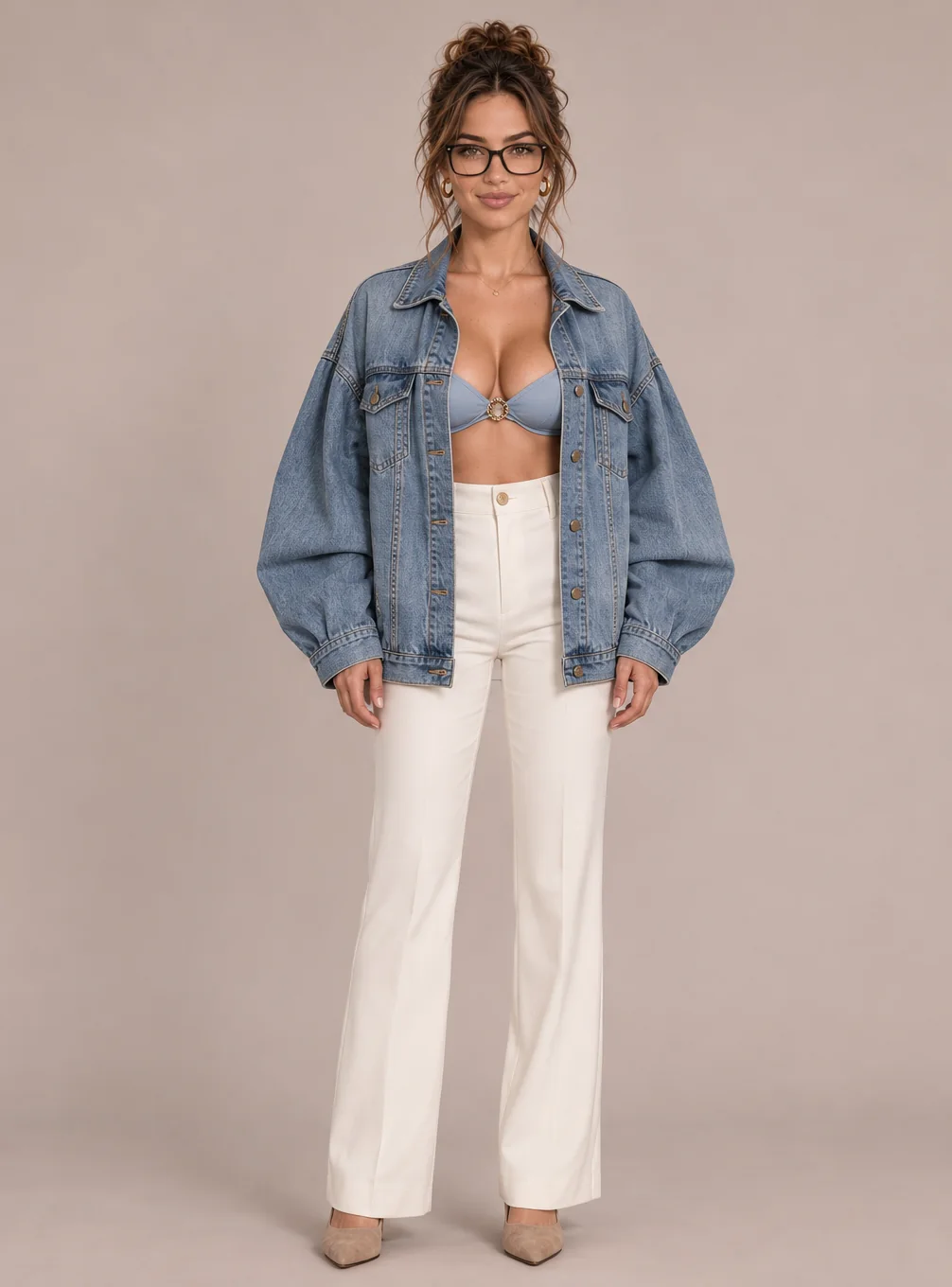
You can take the same idea in a lighter direction. In Denim & White, a pale-blue clasp-front top sits under a jacket with fuller, rounded sleeves. Its high-waisted off-white trousers carry that lighter palette downward.
It works differently from Denim Afternoon. Here, the jacket's sleeves and open front provide the strongest shapes, while the pale top and trousers create a calmer backdrop. The outfit doesn't rely on a sharp black-and-blue contrast.
Try it three ways: use a dark fitted layer when you want the jacket's opening to read clearly; choose a pale or tonal top for a softer transition; or introduce a collared shirt when you deliberately want extra lines around the neckline. The last option adds structure, but it can also make a jacket with prominent pockets and seams feel busier.
There is no universal best top. The question is which part of the outfit you want someone to notice first.
Three silhouettes, three moods
01. Denim Afternoon: the jacket leads
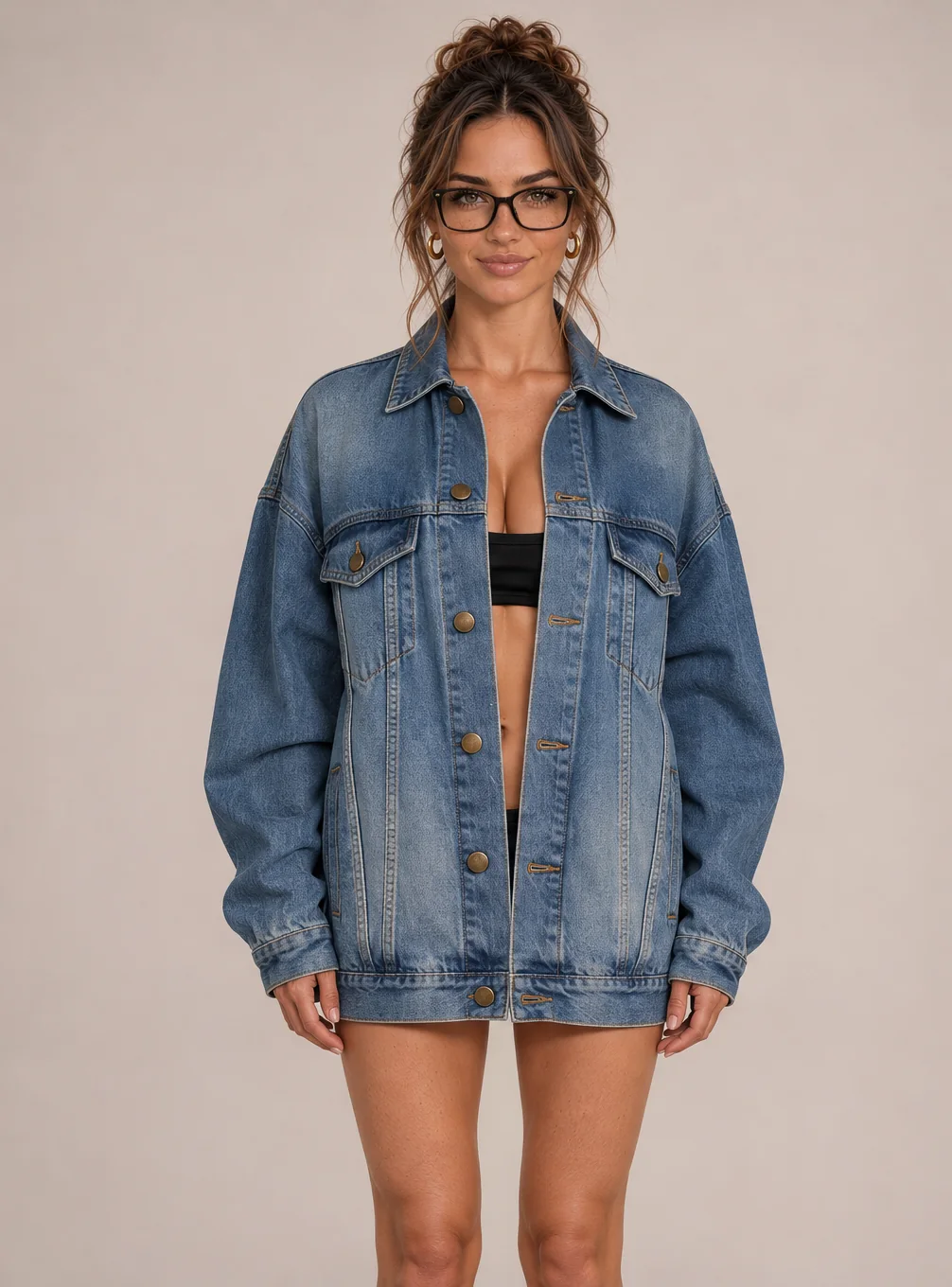 FRONT
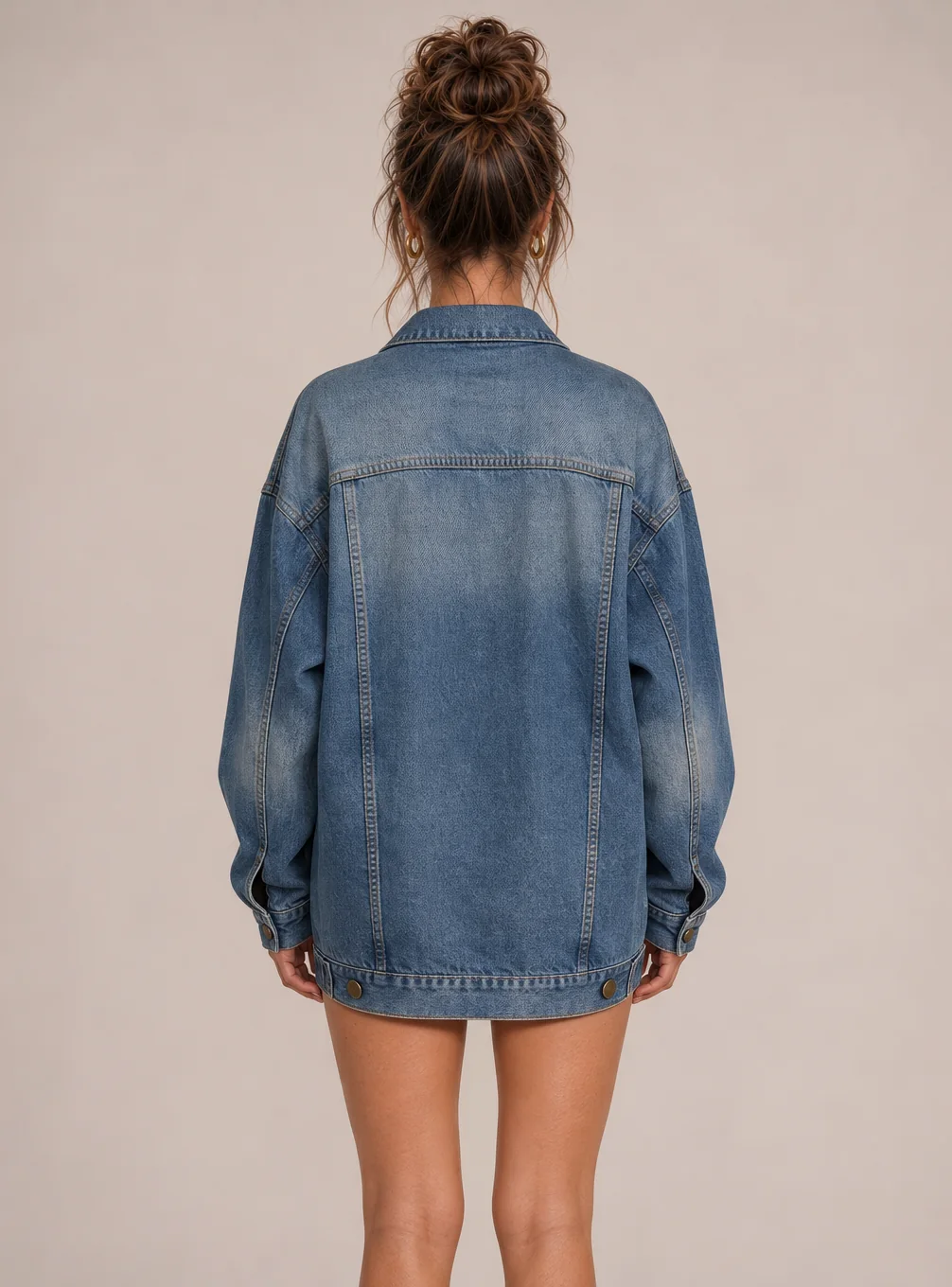 BACK
The jacket's generous sleeves, broad back and longer hem make it the central piece. The dark underlayer keeps the opening legible. What we would preserve in a similar real-world outfit is the low hem and relaxed body, not merely a blue wash or flap chest pockets.
Visual comparison to include: approved front and back views of the oversized jacket.
02. Double Denim: give wide-leg jeans a clear beginning
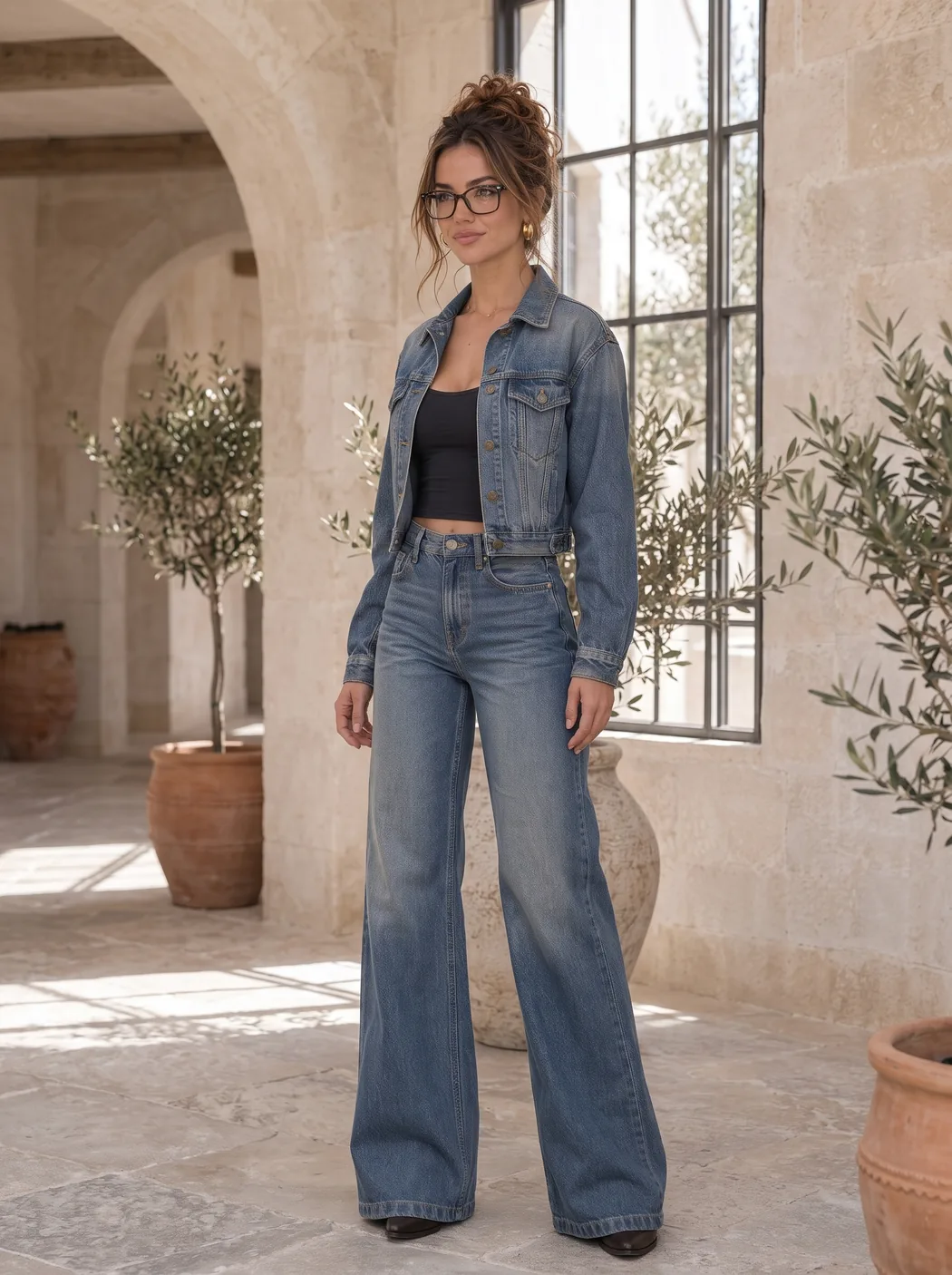 FRONT
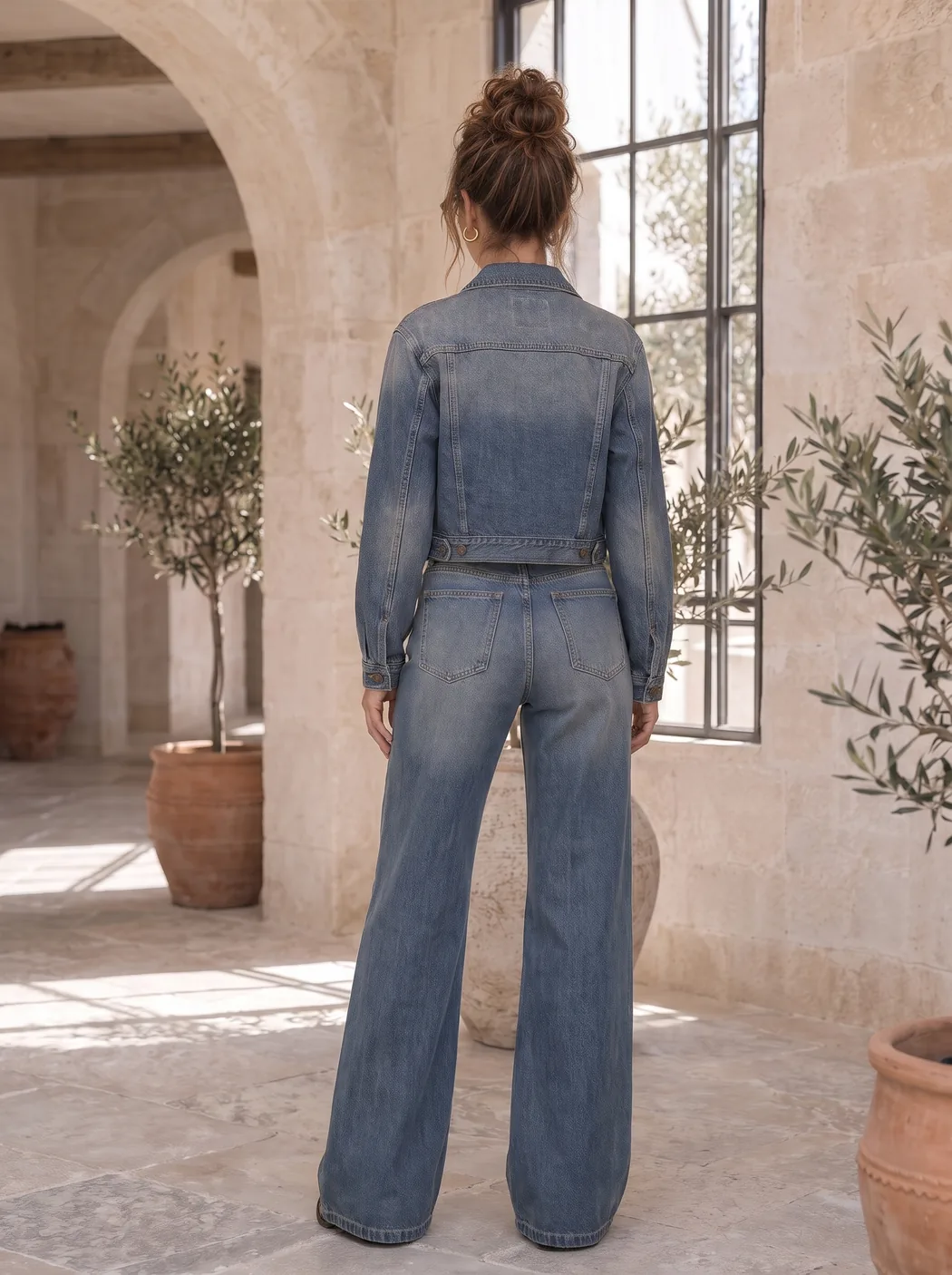 BACK
Here, a cropped denim jacket sits above high-rise wide-leg jeans in a closely related washed blue. The upper and lower pieces share colour, but their lengths do different jobs. The shorter jacket reveals the waistband; the jeans carry the longer, fuller line.
This is also why double denim doesn't need a complicated rule about matching washes. Matching can look intentional when the shapes differ. Contrasting washes can work too, but then colour becomes another point of emphasis.
Visual comparison to include: approved full-length front and back editorial images.
03. Denim & White: let the sleeves do the talking
 FRONT
 BACK
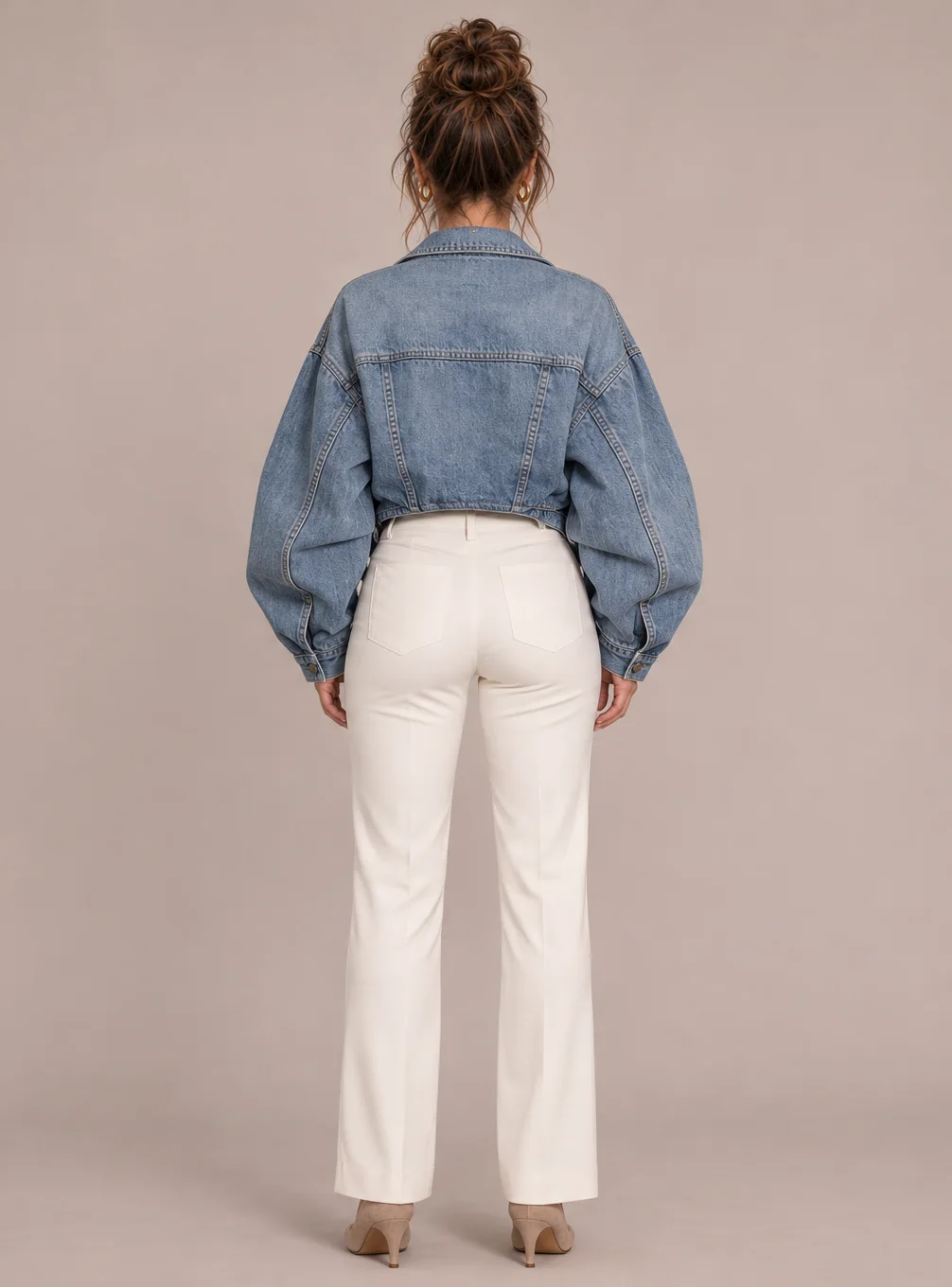
This jacket has a point collar, button-flap pockets and distinctly rounded balloon sleeves. Its front hangs lower than its cropped rear hem, a difference that is much clearer in the back view. The straight, off-white trousers create a quieter outline below the sleeves.
What we like is the restraint in the lower half. There is already plenty happening above the waist, so the pale trousers don't need dramatic additional volume.
Visual comparison to include: front and back images, highlighting the unequal hem lengths.
Does the wash have to match?
Not at all. But it helps to understand why blue denim looks the way it does.
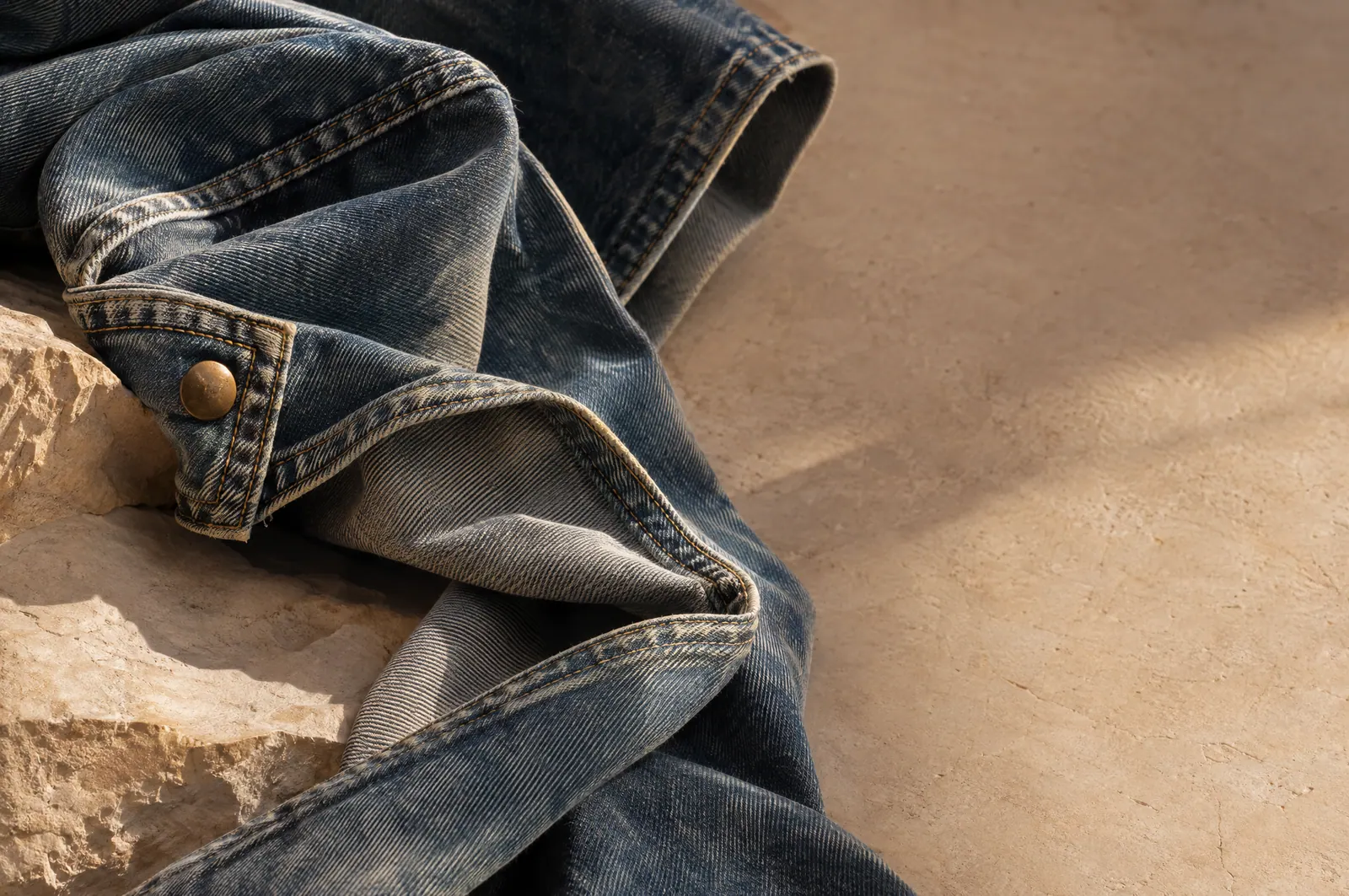
In conventional indigo denim, the lengthwise warp yarns are dyed blue while the crosswise weft yarns are often left lighter. The weave commonly forms the familiar diagonal twill texture. CottonWorks' denim reference explains those constructions and the range of denim fabric weights.
A faded appearance, though, isn't proof of one particular treatment. Different finishing techniques can produce worn or washed effects. Neither a product photograph nor an editorial rendering confirms exactly how the colour was achieved.
In styling terms, we think the useful question is whether the wash creates continuity or contrast. Double Denim uses closely related blues so that the silhouette remains the focus. Denim & White creates a stronger colour division between the jacket and trousers. Both are deliberate, just in different ways.
From the fashion archive to the real wardrobe
Retailers are useful fashion research sources because they work with actual garments and describe how their styling teams combine them. Their recommendations are perspectives, not laws.
In a March 2026 ASOS denim-styling interview, lead designer Zara Appadoo favours coordinated washes for a unified double-denim look and also suggests relaxed jackets with jeans. That is one valid approach. OVeIC's Double Denim shows a different way to achieve balance: a shorter jacket against a wider leg, with the proportions doing more of the work.
Levi Strauss & Co.'s history of the Trucker jacket adds another useful detail. The company's Type III style emerged in 1961, with its recognizable angled front panels. The term Trucker later became associated with that design, although it is often applied more broadly today.
That history helps us be precise. A cropped, trucker-inspired OVeIC jacket shares elements of the tradition, but we shouldn't claim it is the same historic pattern or construction as a Levi's garment.
And on REVOLVE's Denim Guide, jackets sit alongside denim dresses, flares and skirts. That kind of merchandising reminds us to think of a jacket as one part of a broader wardrobe, not a piece that can only be paired with jeans.
The Real-World Edit: Similar Doesn't Mean Identical
Two jackets from Levi's help explain the difference between an oversized outline and a cropped silhouette. We selected these specific real-world styles because their shape, not just their denim colour, relates to an OVeIC look.
The Levi's XL Trucker Jacket, in Trial Case medium wash, uses a deliberately loose body with room through the shoulders and sleeves. That makes it a more useful direction for recreating the relaxed outline of Denim Afternoon than a slim-fit original trucker. The placement of pockets, seams and the precise hem are not identical, so compare the measurements rather than treating the two as interchangeable.
The Levi's Loose Cropped Trucker Jacket is a closer structural reference for Double Denim: a shorter hem, a relaxed body and traditional collar and pocket details. The particular retail version we've examined is a darker wash than OVeIC's mid-blue look. That changes the colour balance, even when the jacket's proportions point in a similar direction.
A product page should help you decide, not make the decision for you. Before choosing any similar style, check its jacket length relative to the waistband, the shoulder drop, sleeve volume, material composition and current size availability. The retailer's specifications describe the real item sold there, not the physical properties of an OVeIC digital garment.
Neither example is a confirmed exact match. They are carefully selected ways to compare the visual decisions in the Denim Edit with actual garments.
Look at the back before deciding
One last detail is surprisingly easy to overlook: the rear silhouette.
The front of Denim & White suggests a roomy jacket with a fairly conventional opening. The back shows a noticeably shorter hem. Double Denim's back view shows how the cropped jacket leaves the upper jeans and rear pockets unobscured. Denim Afternoon's back confirms the opposite, longer shape.
A front image alone would conceal some of the most important differences between these outfits. That's why we're interested in showing both views whenever we discuss their construction and styling.
Explore The Denim Edit, compare the three looks, and use OVeIC's Fitting Room to experiment with the available combinations.
The best denim-jacket outfit isn't necessarily the one following the most rules. It's the one where the jacket's shape, the layers beneath it and the proportions below all seem to be making the same decision.
Research notes
This story uses CottonWorks for denim construction, Seamwork for garment ease, Levi Strauss & Co.'s archives for jacket history, and identifiable ASOS, REVOLVE, Levi's and ASOS DESIGN publications for retailer styling and product comparisons. OVeIC's styling conclusions are original interpretations of its own front/back editorial imagery.